Dr Grzegorz Joachimiak
Head of the Centre for Digital Musicology
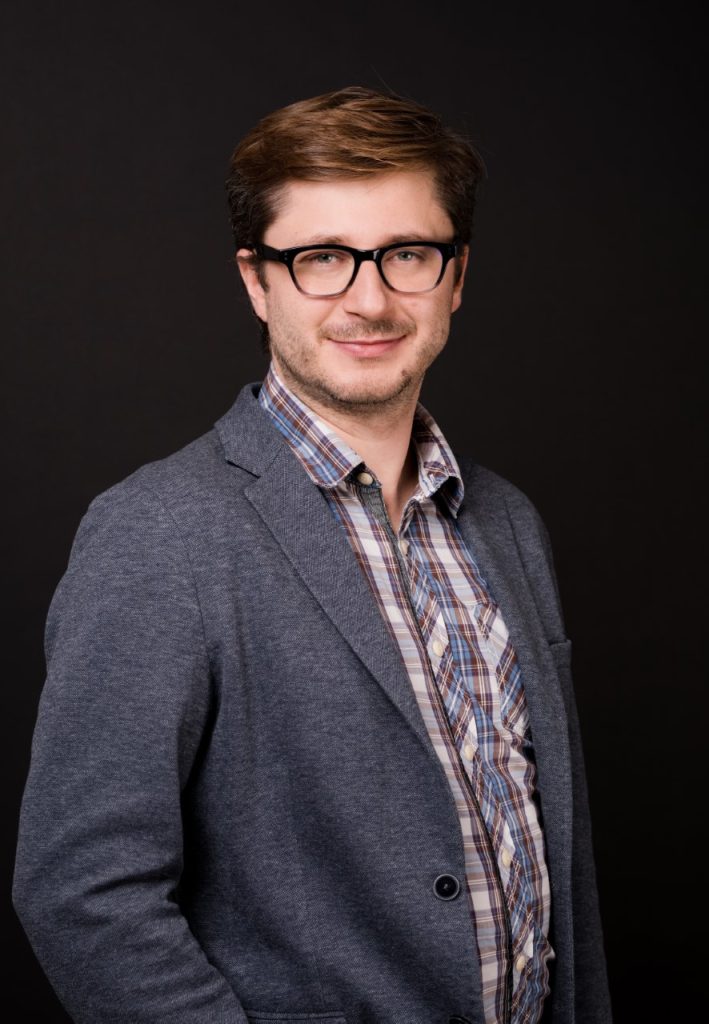
Musicologist, Assistant Professor at the Institute of Musicology, University of Wrocław, and graduate of the Faculty of Instrumental Studies at the Karol Lipiński Academy of Music in Wrocław. He specializes in research on early music, combining historical musicology with advanced digital technologies. His work focuses on the analysis of musical sources, particularly those written in tablature notation. He applies transcription and machine learning, codicological and paleographical analysis, as well as Optical Music Recognition (OMR). His research interests also include the performative aspects of early music and stylometry. The results of his research are published in academic journals and scholarly monographs, interpreting musical heritage within the context of contemporary culture and digital humanities.
Contact: grzegorz.joachimiak@uwr.edu.pl
Professor Dr. Remigiusz Pośpiech
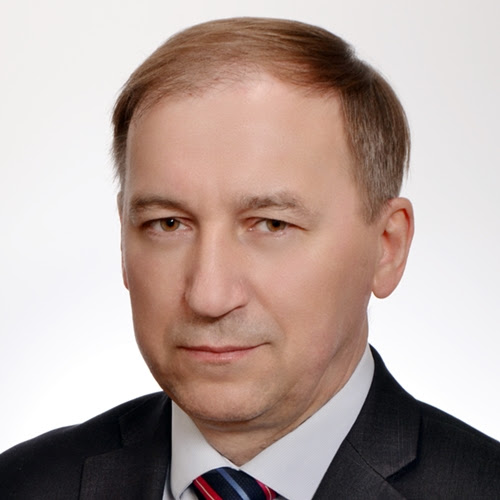
Musicologist, graduate of the Institute of Musicology at the John Paul II Catholic University of Lublin. Director of the Institute of Musicology at the University of Wrocław. Chair of the Scholarly and Editorial Committee of the Jasna Góra Music Collection (Jasnogórskie Muzykalia), initiator and editor-in-chief of the Musica Claromontana source series and the scholarly series Musica Claromontana – Studia, as well as the series Thesaurus Musicorum Silesiae. Member of the editorial boards of numerous academic journals and publication series (including Monumenta Musicae in Polonia at the Institute of Art of the Polish Academy of Sciences [PAN]). Since 2016, member of the Committee on Art Studies of the Polish Academy of Sciences, and since 2017, Chair of the Editorial Committee for The Works of Stanisław Moniuszko at PWM Edition in Kraków. Since 2018, member of the Programme Board of the ministerial project Heritage of Polish Music (Dziedzictwo Muzyki Polskiej). Member of both international and national scholarly organizations, including the Görres Society (Görres-Gesellschaft zur Pflege der Wissenschaft), the German Society for Music Research (Gesellschaft für Musikforschung), the Musicologists’ Section of the Polish Composers’ Union, and the Association of Polish Church Musicians.
His research focuses on Polish music of the 17th–19th centuries (with particular emphasis on sacred music), the history of musical culture in Silesia, and issues related to liturgical music after the Second Vatican Council. He is the author of over 300 publications, including two monographs (Christmas Music at Jasna Góra in the 18th and 19th Centuries, Opole 2000; and Polyphonic Music in the Celebration of the Eucharist in Silesia in the 17th and 18th Centuries, Opole 2004), over 20 collective volumes, and critical editions of music sources (including works by M.J. Żebrowski, J. Elsner, and S. Moniuszko). He has also prepared numerous scholarly commentaries for CD recordings and radio broadcasts devoted to musical culture. Laureate of the Silver Pipe (Srebrna Piszczałka) award (2007) from the Primate of Poland “for outstanding achievements and contributions to the development of sacred music in Poland,” the Hyacinthus Opoliensis award from the Bishop of Opole (2017) for contributions to the development of sacred music in Silesia, and the Medal of the National Education Commission (2017).
Contact: remigiusz.pospiech@uwr.edu.pl
Marianna Siatkowska, MA
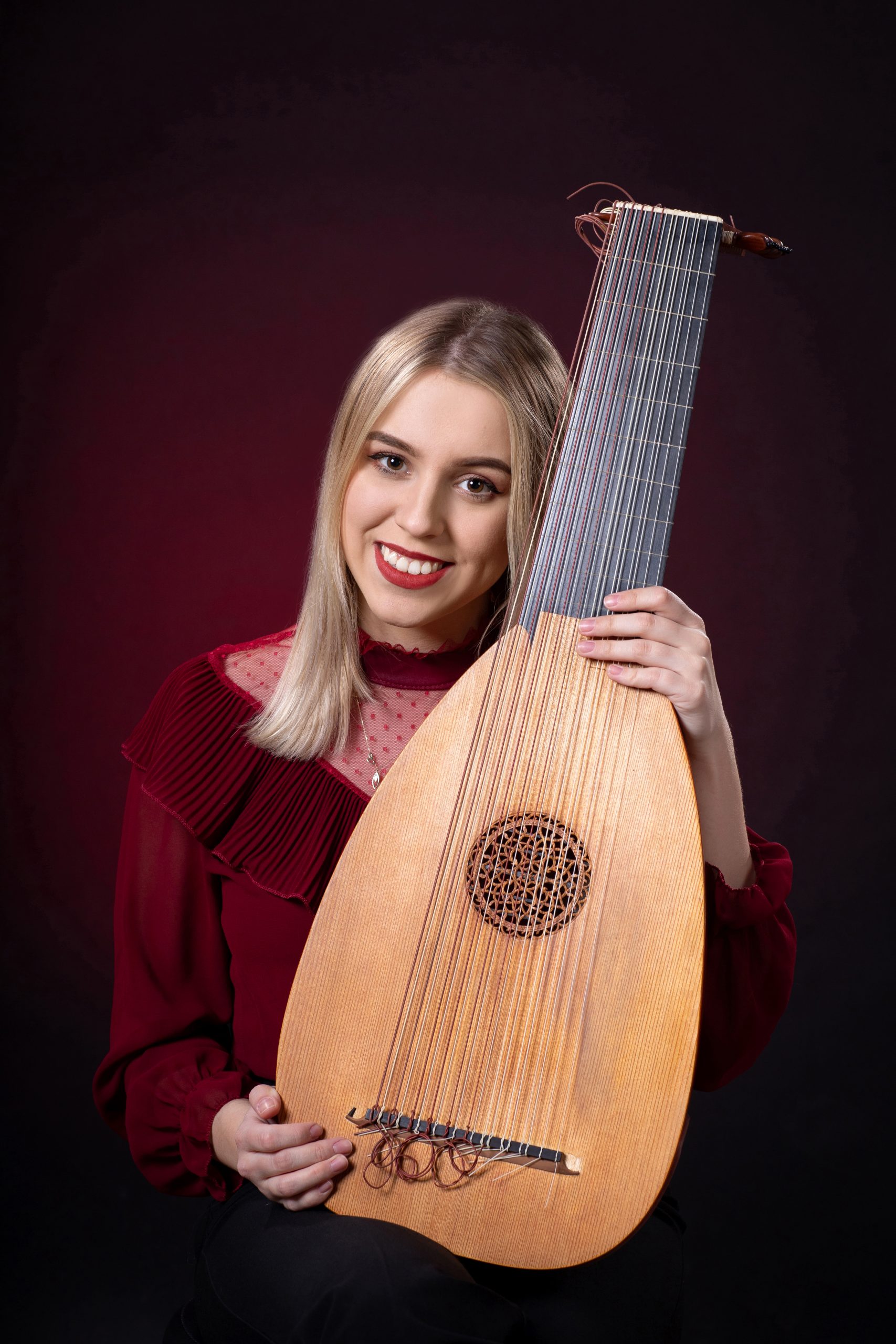
Marianna Siatkowska holds degrees in musicology from Adam Mickiewicz University and in lute performance from the I. J. Paderewski Academy of Music in Poznań. She is currently a doctoral student at the Institute of Musicology, University of Wrocław, where she is conducting research under the supervision of Prof. Remigiusz Pośpiech and Dr. Grzegorz Joachimiak. Her PhD project focuses on the 17th-century French practice of contrepartie—the addition of parts to pre-existing solo compositions. She is also affiliated with the Centre for Digital Musicology, where she contributes to various research projects and helps organize scholarly events.
Her main research interests lie in 17th- and 18th-century music, with a particular emphasis on lute tablatures and French lute repertoire. As both a musicologist and a lutenist, she integrates source studies and historically informed performance with issues of transcription and musical analysis, drawing on contemporary digital tools.
In addition to her academic work, she is actively involved in numerous artistic projects that bridge theory and practice. She regularly participates in international conferences, publishes in leading musicological journals, and collaborates with Polish and international institutions engaged in innovative early music research. By combining traditional historical musicology with digital methods, she aims to provide a more comprehensive understanding of early music, encompassing both the reconstruction of historical performance practices and the contextual analysis of repertoire within its stylistic evolution.
Contact: marianna.siatkowska@uwr.edu.pl
Collaborations:
Professor Tim Crawford — Goldsmiths, University of London
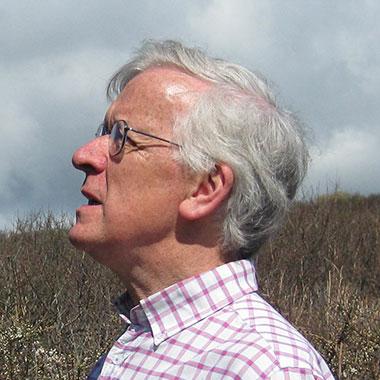
Tim Crawford, Emeritus Professor at Goldsmiths University of London, is an acknowledged expert in lute music of the 16th-18th centuries. He was the editor and joint editor of six volumes of Sämtliche Werke of the lutenist Silvius Leopold Weiss, a contemporary and acquaintance of J. S. Bach, for Das Erbe deutscher Musik (2002-11). His research interests and editorial activities have also embraced the music of John Dowland, George Frederick Handel, Joseph Haydn and Wolfgang Amadeus Mozart. His work on music information retrieval has led to research projects funded by the Arts & Humanities Research Council, Horizon 2020 and the British Academy. He was a co-founder of the annual International Society of Music Information Retrieval (ISMIR) conference series in 2000, and acted as ISMIR’s President in 2012-2013.
David Lewis, MSc Eng. — Oxford University
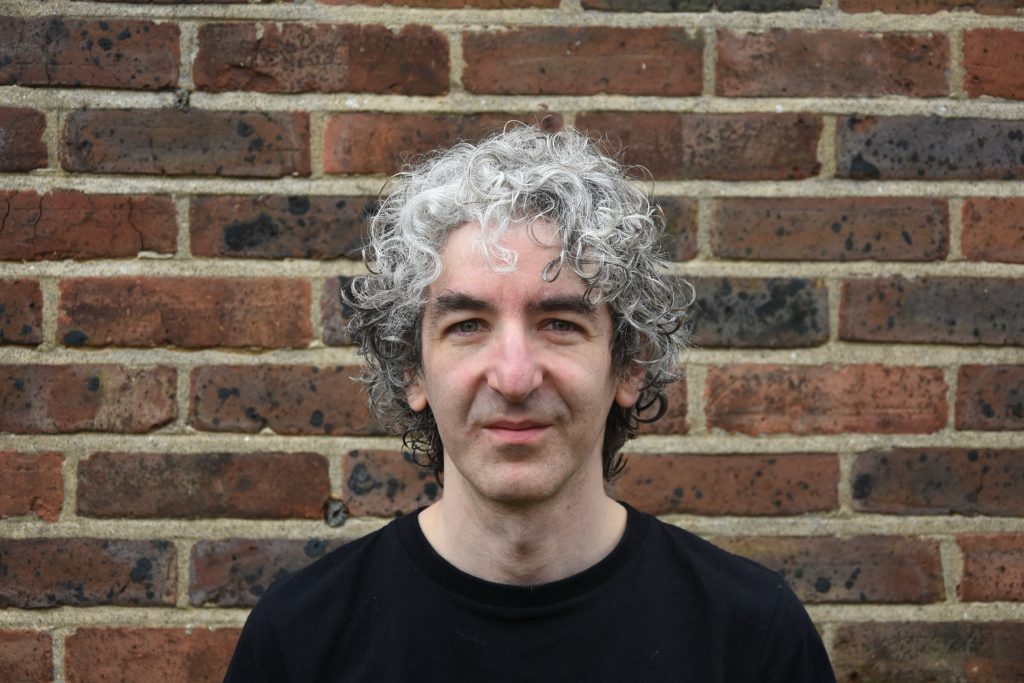
David Lewis is a researcher at the University of Oxford e-Research Centre in Oxford and Lecturer in Computer Science at Goldsmiths, University of London, where he teaches Digital Humanities. He studied historical musicology at Kings College London and has since worked on a wide range of digital musicology and digital humanities projects, including lute tablatures, medieval and early modern music treatises, arrangements of concert works for domestic settings, and composer work catalogues.
Sonia Wronkowska, MA — National Library of Poland
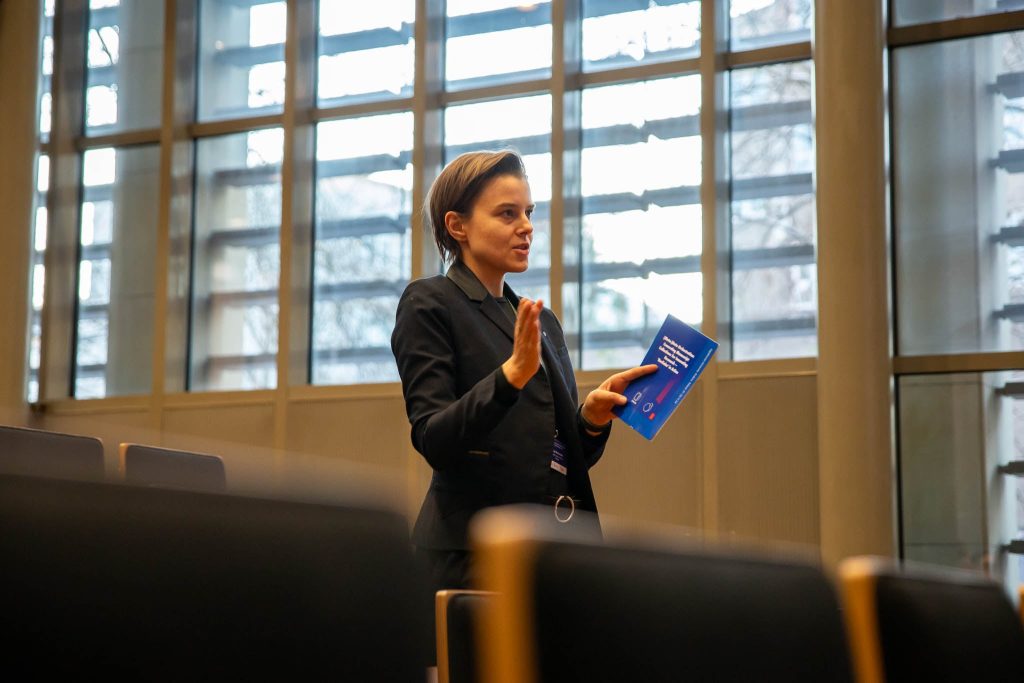
Sonia Wronkowska graduated in musicology from Adam Mickiewicz University in Poznań and also studied computer science at the Polish-Japanese Academy of Information Technology in Warsaw. She enriched her competences by taking digital humanities courses at the University of Paderborn.
She works at the Department of Music Collections of the National Library od Poland and has been its manager since 2023. She began working at the NLP in 2013; over the years she has served as the head of the Polona Development Unit (Digital Collections Department), the head of the IT Systems Unit (Information Technology Department), and the NLP Director’s plenipotentiary for digital development. For several years she acted as the product leader of the Polona.pl digital library, responsible for its design, development, implementation of subsequent versions, and maintenance. She participated in the preparation and implementation of the NLP’s most important IT and digitization projects, initiated and coordinated technological cooperation with external agents. In 2020–2023, as part of a partnership between the national libraries of Poland and Norway, she was the project manager and development team leader in a project to modernize the management processes of digital collections at the National Library of Norway.
She is involved in the substantive, organizational and strategic work of RISM (Répertoire International des Sources Musicales). She organized RISM trainings at the NLP and provided substantive and technical support to Polish institutions and researchers as part of the activities of the Polish RISM Center. She represented the NLP in the work of international communities: IIIF (International Image Interoperability Framework), AI4LAM (Artificial Intelligence for Libraries, Archives and Museums), IAML (International Association of Music Libraries, Archives and Documentation Centres), MEI (Music Encoding Initiative), SIMSSA (Single Interface for Music Score Searching and Analysis). She has presented many papers at musicological, editorial, library and technology conferences in Poland and abroad.
Her research interests focus on 18th-century musical culture, source studies and music editing, as well as digital humanities. She is an author of scientific publications, music reviews and popularizing articles, and an editor of early music. She has participated in international research projects in the field of musicology and digital humanities. She has conducted classes for students at the Department of Musicology at Adam Mickiewicz University in Poznań (2015–2016), at the Faculty of Artes Liberales at the University of Warsaw (2017–2018), at the Institute of Musicology at Wrocław University (2024–2025). In the years 2016–2023, she was the curator of the early music program of the Warsaw festival Nowe Epifanie.
Arkadiusz Margraf, MSc Eng. MA — Poznań Supercomputing and Networking Center
Tomasz Kalota, MSc Eng. — University Centre for Digital Humanities, University of Wrocław
Rafał Raczyński, MSc Eng. MA — University Centre for Digital Humanities, University of Wrocław
Marcin Szala, MSc Eng. — Reprography and Digitalization Department, University of Wrocław
Associate Professor Agnieszka Kuniczuk – Centre for Textual Genetics and Digital Transcriptions, University of Wrocław
Lenguajes y Sistemas Infromaticos, Universidad de Alicante
Regional GLAM (Galleries, Libraries, Archives, Museums)

RISM (Répertoire International des Sources Musicales)

The Witold Lutosławski National Forum of Music in Wrocław